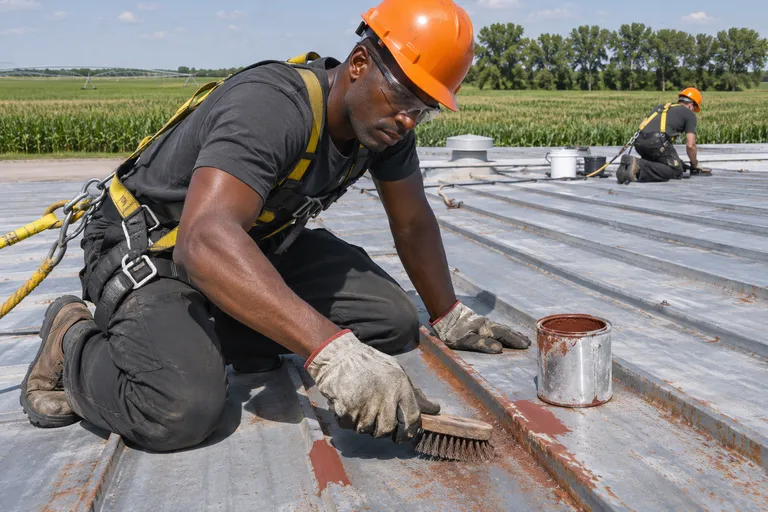
Commercial Metal Roof Coating
Rust treatment and screw replacement on steel roofs come before any silicone pass.
Grand Island commercial metal roof coating
Silicone Coating
As a Grand Island silicone roof coating contractor, we spray silicone over metal and low-slope roofs where water lingers in gutters, valleys, and flat sections after storms.
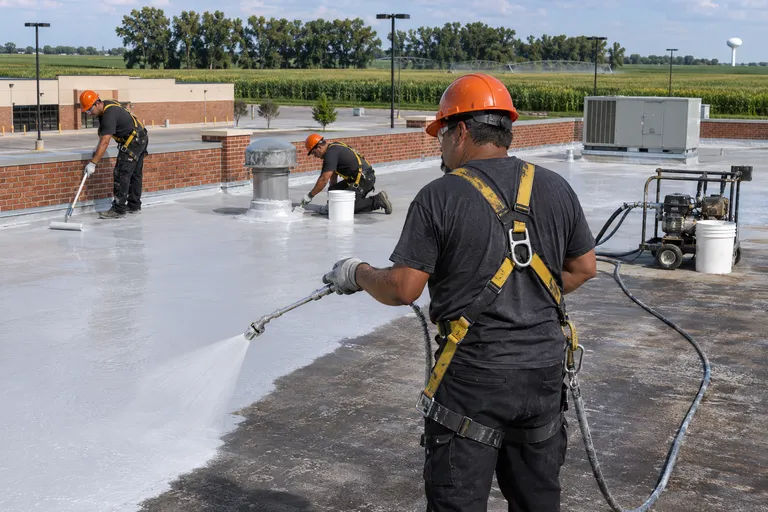
Built for standing water
Wet mil gauge on every pass
Adhesion test before spraying
High UV resistance
Grand Island silicone roof coating fits roofs where drainage is slow. The chart compares silicone with the other two coatings for common conditions.
| Roof Condition | Silicone | Acrylic | Foam + Coat |
|---|---|---|---|
| Water sits 48 hours after rain | Usually fits | Rarely fits | Sometimes fits |
| Steep panels that drain fast | Sometimes fits | Usually fits | Rarely fits |
| Old silicone already on the roof | Usually fits | Rarely fits | Rarely fits |
| Oily exhaust near fans | Rarely fits | Sometimes fits | Sometimes fits |
| Cold roof that needs insulation | Rarely fits | Rarely fits | Usually fits |
Silicone is picked for wet roofs, so the conditions below show up again and again on the jobs where it goes on.
Dirty rings in low sections mark where water sat for days. Acrylic softens there, while silicone stays put, so these areas set the coating choice for the roof.
Wide box gutters on older plants drain slowly and collect grit. They get cleaned out, primed, and coated with extra build so the gutter floor holds up.
Caulk at seams and laps hardens and pulls away after enough winters. It is cut out and replaced with silicone-compatible sealant before the main coat goes on.
Rooftop units often sit where water collects around their curbs. Flashing at those curbs gets fabric and a heavier silicone pass.
Patchy acrylic or aluminum paint has to come off or be primed before silicone bonds. An adhesion pull test shows which applies.
Dust settles into silicone over time and dulls its reflectivity on the roof. Cleaning on a schedule keeps the coating brighter and shows any cuts in the film before they leak.
Silicone is one of three options. Here is how it compares on the roofs we see in town.
| System | Best On | Prep Before Coating | Recoat Path |
|---|---|---|---|
| Silicone | Low spots, ponding, flat gutters, high UV | Wash, primer where needed, silicone seam sealant | Silicone only |
| Acrylic | Sloped, fast-draining metal panels | Wash, rust primer, fabric at laps | Acrylic or other coatings |
| Spray Foam + Silicone Top Coat | Roofs that need added insulation and slope | Dry deck, masking for overspray | Recoat the silicone top coat |
Silicone earns its place on the wettest parts of a roof. These gains show up first.
Water left in gutters and flat sections does not soften the film, so wet zones keep their protection between storms and through spring melt.
Sun-facing panels lose acrylic and paint fastest, while a silicone film on those runs keeps its body summer after summer.
Clean, well-sealed roofs can reach the specified mils in a single heavy pass, because silicone builds thickness quickly.
Cooler days that would stall acrylic still work for silicone, which helps fit roof jobs into spring and fall around Grand Island's freezes.
Call us while it is still sitting there. Photos of where it collects help us plan silicone around your gutters and low panels.
(402) 407-4082Silicone needs a clean, dry roof and the right primer. Here is the sequence.
We map the ponding areas, test the existing surface for adhesion, check every seam and screw, and look inside for wet insulation that must come out first.
Pressure washing removes dirt, chalk, and loose coating. The roof dries completely, since silicone over trapped water blisters.
Rusted steel and some old coatings get primer. Seams, curbs, and screws get silicone-compatible sealant and fabric where they move.
Silicone is sprayed in one or two passes, with a wet mil gauge reading taken as the crew goes, and extra build in gutters and low spots.
Silicone often shares a roof with other work, since few buildings are wet everywhere. These systems cover the drier sections and the steel prep.
Rust treatment and screw replacement on steel roofs come before any silicone pass.
Grand Island commercial metal roof coating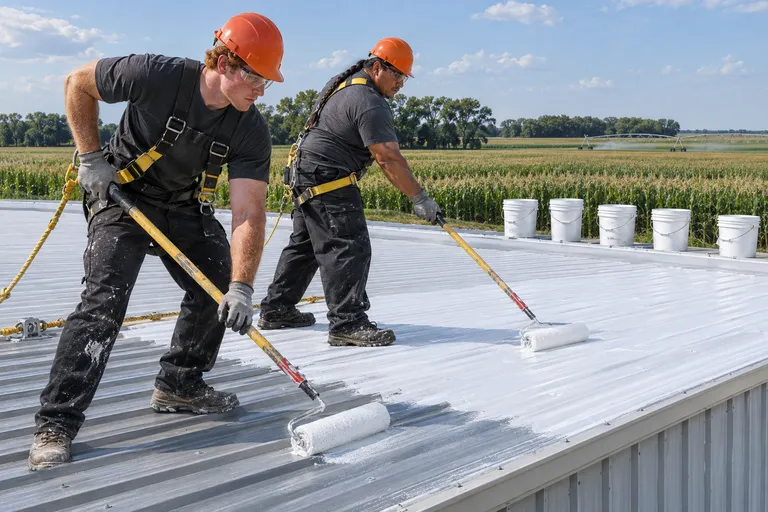
Steep, dry sections of the same building can take acrylic at a lower material cost.
Grand Island acrylic roof coating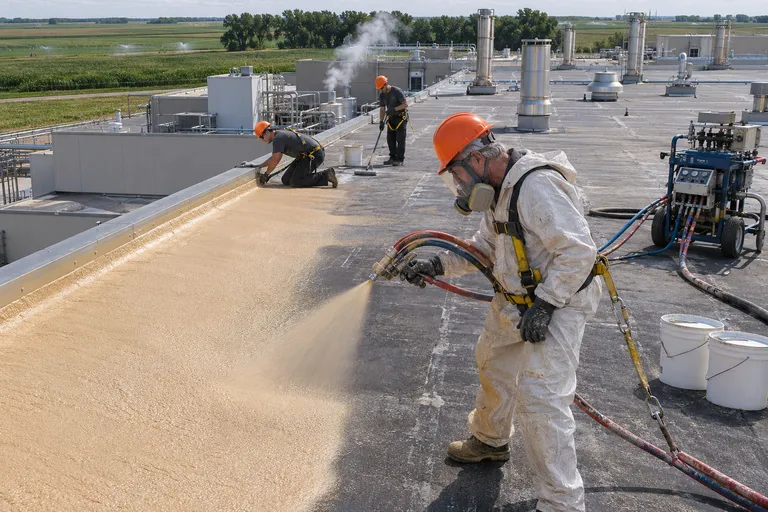
Foam with a silicone top coat adds insulation and slope on flat, cold roofs.
Grand Island spray foam roofing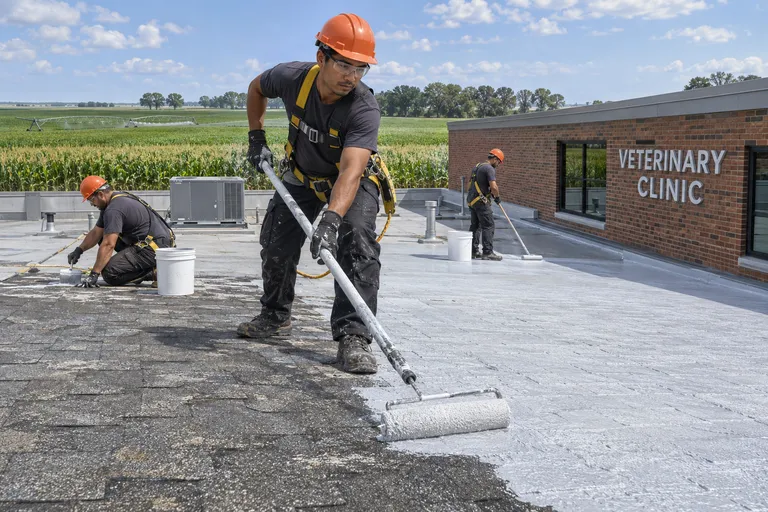
Shingled office wings next to a coated plant roof need a separate plan.
Grand Island shingle roof coatingWhat owners ask before choosing silicone.
Coat Count
One or two, set by the manufacturer's required dry film thickness.
Clean, well-sealed panels can take a single heavy coat. Roofs with many seams, screws, and rust spots get two. A wet mil gauge reading during spraying confirms every section reaches the required mils.
Lifespan
Applied thickness, adhesion, and foot traffic set how long it holds.
Silicone resists UV and ponding, so it ages slowly in low spots. Hail and dragged equipment can cut it, and dirt dulls it. Manufacturers rate their systems by thickness, with thicker builds carrying longer ratings.
Comparison
Silicone fits buildings with low spots, flat gutters, or water at the eave. Acrylic fits well-sloped panels that drain.
Acrylic accepts later acrylic recoats easily, while silicone bonds best to silicone, which locks in future recoats. Exhaust, foot traffic, and the time of year also weigh in.
Price
It falls in the $2.50 to $4.00 per square foot planning range, often in the middle or upper part.
Material cost and required thickness push silicone up the range. Seam work, rust priming, wet insulation replacement, and lift access add more, while a larger roof spreads setup cost across more area.
Trade-Offs
Dirt pickup, a slick surface when wet, and limited recoat options are the main ones.
Dust lowers reflectivity over time. Frost or rain makes silicone slippery, so walkway pads help. Most coatings will not bond to it later, and hail or dropped tools can cut it, so regular checks matter.
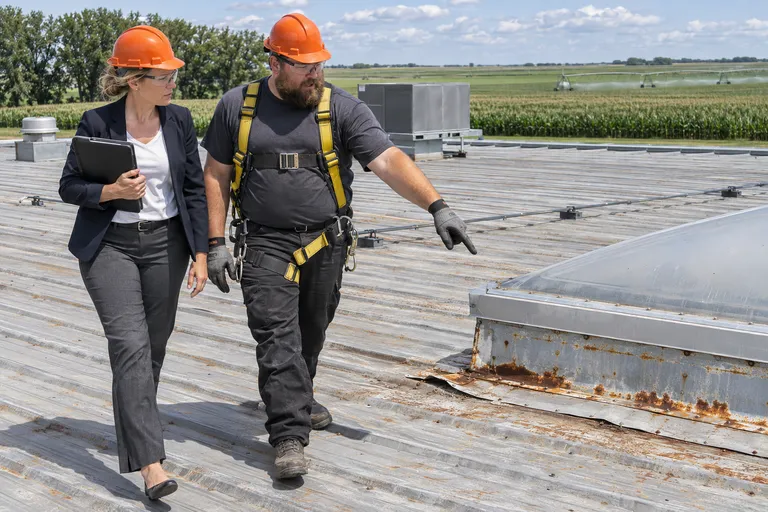
Show us where water sits on your roof. We will check adhesion, seams, and drainage and tell you whether silicone fits.