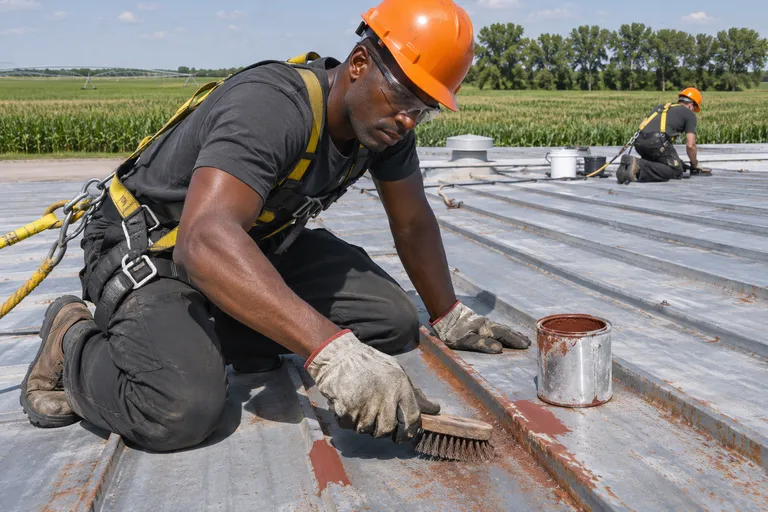
Commercial Metal Roof Coating
Insulated steel buildings with leaks at screws can skip foam and get a metal coating.
Grand Island commercial metal roof coating
Spray Foam
As a Grand Island spray foam roofing contractor, we spray polyurethane foam over dry metal and low-slope decks, then seal it under a coating that protects the foam from sun.
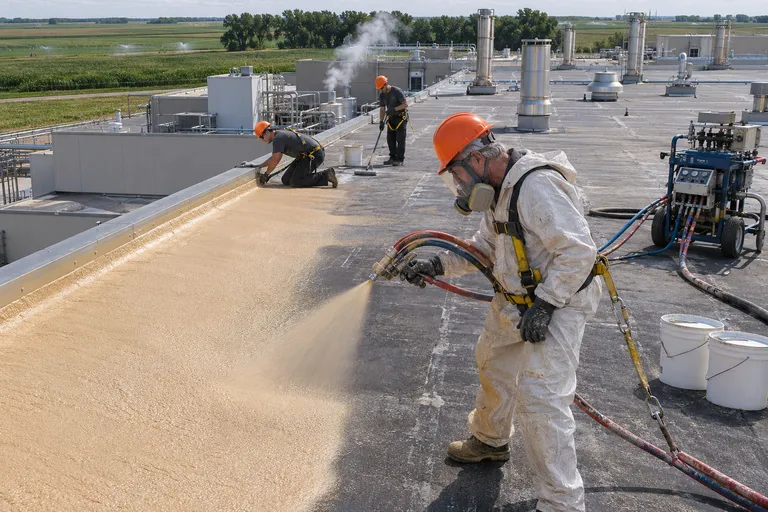
Foam sprayed to set thickness
Wet insulation found and removed
Spraying held in high wind
Top coat over all foam
Grand Island spray foam roofing suits roofs that need insulation or a flatter surface. These conditions show where foam fits and where it waits.
| Roof Condition | Foam Now | Dry Out First | Coating Instead |
|---|---|---|---|
| Cold building with little insulation | Usually fits | Rarely fits | Rarely fits |
| Panel ribs that trap water | Usually fits | Rarely fits | Sometimes fits |
| Wet insulation under the deck | Rarely fits | Usually fits | Rarely fits |
| Warm building, good drainage | Rarely fits | Rarely fits | Usually fits |
| Busy fan intakes on the roof | Sometimes fits | Rarely fits | Sometimes fits |
Foam answers a few specific roof problems. Each of these comes up on foam jobs around town.
Shops with bare steel overhead drip condensation in winter. A foam layer on top insulates the panels and moves the cold surface outside.
Shallow panel ribs hold water at the laps. Foam fills the profile and can be built thicker to push water toward the eaves or drains.
Exposed-fastener roofs leak at screws as washers age. Foam covers every screw and lap at once instead of sealing each one by hand.
Wet batts or board under the deck must be found and replaced, or trapped moisture keeps damaging the steel under new foam.
Hail dings and birds expose foam to sunlight. Exposed spots get sealed quickly so the foam underneath does not break down.
Overspray drifts, so intakes get shut down and masked while foam goes on. Curbs get foam built up around them as part of the layer.
Foam needs a coating over it. The choice of top coat and the alternatives look like this.
| System | Best On | Prep Before Coating | Recoat Path |
|---|---|---|---|
| Spray Foam + Silicone Top Coat | Flat or low-slope roofs with ponding | Dry deck, primer, masking, thickness checks | Recoat silicone over the foam |
| Spray Foam + Acrylic Top Coat | Sloped foam roofs that drain | Same foam prep, warm-weather coating | Recoat acrylic over the foam |
| Metal Roof Coating Only | Insulated buildings with solid panels | Wash, primer, lap and screw sealing | Recoat the same chemistry |
Foam changes how a building holds heat and sheds water. These are the gains owners mention.
Foam adds insulation and one continuous layer, and in return it needs dry weather to spray and a top coat that gets renewed.
When the top coat wears, the foam stays and only the coating is renewed, which keeps the roof in place for decades of recoats.
Insulation on the outside of the panels cuts condensation drips and keeps the steel overhead warmer through January.
Laps and screws disappear under the foam, so rain has no seams to follow into the building.
Call us and describe when it drips. Condensation and roof leaks look alike from below, and we will sort out which one you have.
(402) 407-4082Foam reacts to weather and moisture, so preparation and timing get as much attention as the spraying.
We check the deck for wet insulation with a moisture meter, measure the roof, locate drains and fan intakes, and confirm the steel can carry the work.
Wet material comes out. The deck is washed and dried, rust gets primed, and intakes, vehicles, and walls nearby are masked or shut down against overspray.
Foam goes on in lifts to the planned thickness, with extra build toward drains. Spraying stops when wind or cold moves outside the foam maker's limits.
Silicone or acrylic coating covers all foam right after spraying, applied to the specified mils so sunlight never reaches the foam.
Foam is not right for every section. These systems cover the parts it skips.
Insulated steel buildings with leaks at screws can skip foam and get a metal coating.
Grand Island commercial metal roof coating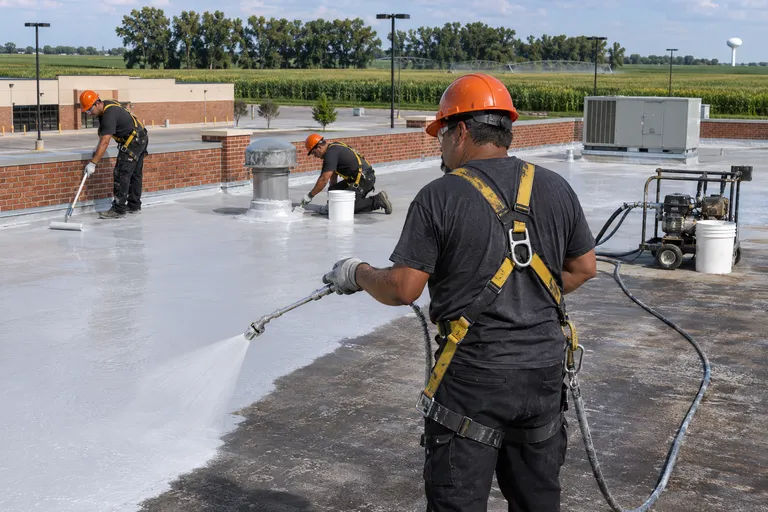
Silicone is a common top coat over foam on low, flat sections.
Grand Island silicone roof coating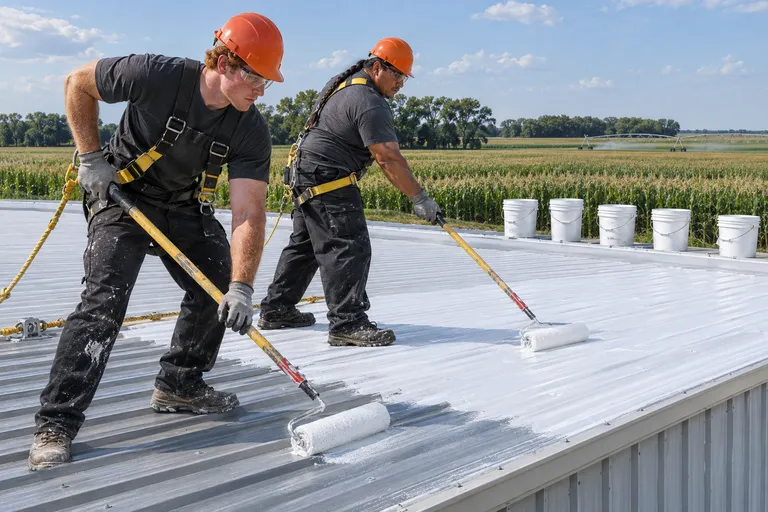
Acrylic works as a top coat on foam that drains well.
Grand Island acrylic roof coating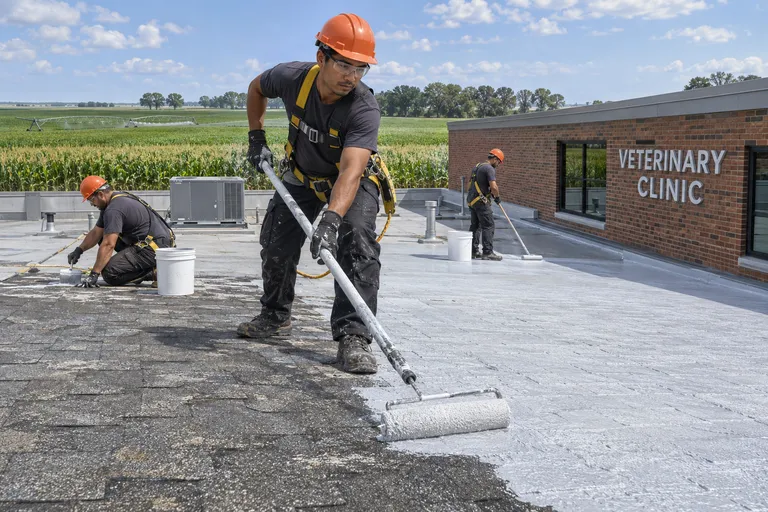
Shingled sections of a property are coated separately from any foam roof.
Grand Island shingle roof coatingCommon questions before choosing foam.
Lifespan
Its life follows the top coat over the foam.
Polyurethane foam breaks down in sunlight, so the coating has to stay intact. Hail dents, bird pecks, and foot traffic expose foam and need quick sealing, and roofs inspected and recoated on schedule keep the same foam through several recoats.
Pros And Cons
Foam insulates, forms one continuous layer, and can be built up to move water off low spots.
It is light compared with board insulation plus a new membrane. On the other side, spraying has strict weather limits, hail and foot traffic damage it, and the top coat needs recoating over time.
Price
Foam thickness and the coating over it set the price, so it varies more than a plain coating job.
For planning, a full foam system sits closer to the $5 to $8 per square foot replacement range. Tear-off of wet material, edge metal, and wind or cold delays also move the number.
Recoating
When the top coat wears thin, cracks, or lets foam show through.
Look for chalky spots, missing granules, and tan or brown foam. A check after each hail storm catches damage early, and recoating cleans the surface, repairs damaged foam, and applies fresh coating without removing the foam.
Leaks
It can, by covering every seam, lap, and screw in one continuous layer.
Panels are cleaned, rust treated, and dried before spraying, and foam fills the panel profile into a flatter surface. Wet insulation underneath has to be found and removed first, or the trapped moisture keeps damaging the deck.
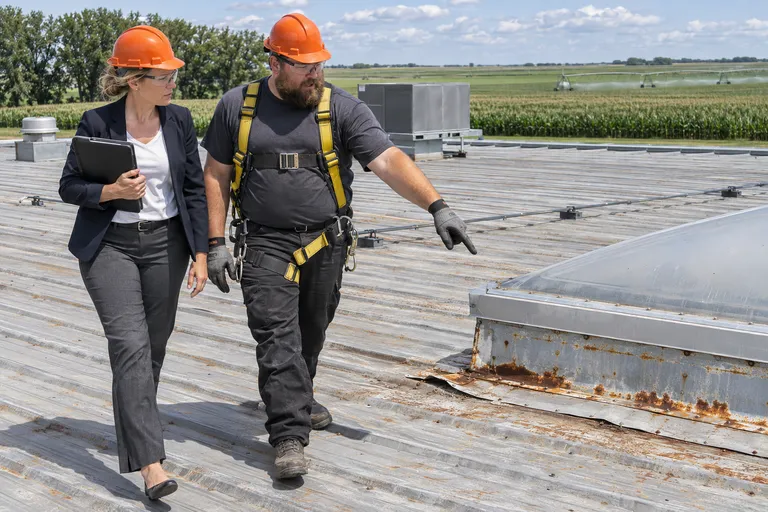
Tell us about the building and how it handles winter. We will check the deck for moisture and tell you whether foam belongs on it.